
C A S E S T U D Y
From selling below cost to a 10% gross margin in five quarters
A products and services distributor with about $15M in revenue, serving institutional customers, was generating steady sales but almost no profit. In 2024 it kept less than 2 cents of gross profit per dollar of sales. Within five quarters, it was keeping 10 cents.
Distribution and services for institutional buyers · $15M revenue before the turnaround · Sales, operations, finance, procurement
B E F O R E A N D A F T E R
10.2%
Gross margin, up from 1.5% in 2024
+$475K
First-quarter gross profit, up from a $73K loss
$1.04M
Second-quarter gross profit, up from $97K
$15.8M
First-half 2026 sales, more than all of 2024
Illustrative figures, adjusted to protect client confidentiality. The size of each improvement matches the actual engagement. Verified figures available under a confidentiality agreement.
T H E S I T U A T I O N
On the surface, the company looked healthy.
It sold products and services to institutional buyers across the country, backed by a warehouse, a service operation and long-standing supplier relationships. Underneath, the numbers told a different story:
Sales had plateaued: around $15M in 2024, but more volume wasn’t adding profit.
Margins were razor-thin: under 2 cents of gross profit per dollar of sales.
Some quarters lost money outright: in Q1 2025 the company sold below cost and lost money on the quarter.
Cash was tight: vendor balances were past due.
The structure had not kept pace with growth: the owners were running sales, operations and finance themselves, without a dedicated operating leader.
W H A T W E F O U N D
The Reality Gap
Leadership believed a busy, high-volume sales operation meant a healthy business. The numbers showed revenue being bought at a loss.
W H A T L E A D E R S H I P S A W
Strong sales
Motivated salespeople
Active marketing and partnerships
A busy team
Normal vendor relationships
“The way we’ve always done it”
W H A T W A S A C T U A L L Y H A P P E N I N G
Deals discounted below product cost, with no minimum margin
Commissions paid on revenue, so a money-losing sale still paid well
Events, flyers and partnerships never measured for return
No reporting connected activity to results
Past-due balances straining supply and terms
Habits that no longer made economic sense
W H A T W E C H A N G E D
Three stages. Each one widened the authority to act.
STAGE 1
SALES
From March 2025
Set a minimum sales margin, so no deal could be sold below cost.
Moved sales commissions from revenue to margin.
Rebuilt CRM discipline, pipeline tracking and forecasting.
Tracked every marketing dollar with promo codes.
Required partnerships to show a return.
STAGE 2
OPERATIONS
From October 2025
The company had its first dedicated operating leader.
Reconfigured the company’s internal software with checks at every step, preventing costly mistakes and speeding up the handoffs between departments.
Introduced weekly leadership reporting on calls, quotes, sales, cash and service productivity.
Connected sales, purchasing, warehouse, shipping and service into one workflow.
STAGE 3
FINANCE & VENDORS
From January 2026
Took over payroll, payments and budgeting.
Introduced spending approvals, so departments had to justify and get sign-off on what they spent.
Restructured past-due vendor balances into payment plans.
Led procurement and vendor negotiations with distributors and manufacturers.
R E S U L T S
Margin improved in every period.
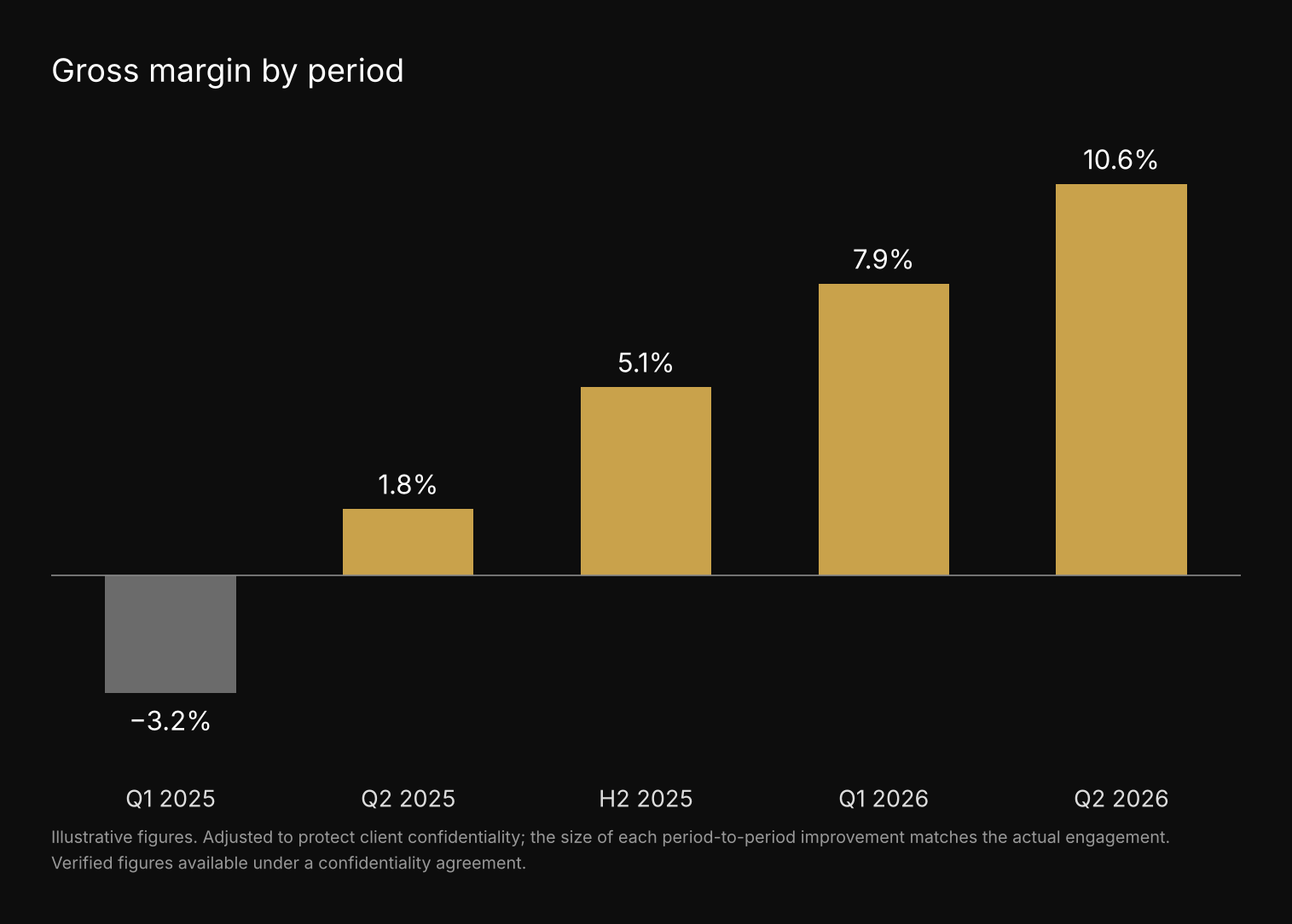
Volume grew at the same time. Sales in the first six months of 2026 exceeded the company’s entire 2024 total.
The company was selling more and keeping more of each sale.
I N T H E I R W O R D S
“Everything we asked him to accomplish, he delivered on and then some.”
— C E O, P R O D U C T S A N D
S E R V I C E S D I S T R I B U T O R
N E X T S T E P
Is there a reality gap in your business?
Book a free conversation. Tell us what isn't working; we will tell you honestly whether we can help.
Not ready to talk? Try the free self-checks.